ServicesGrading
Grading in Simpsonville
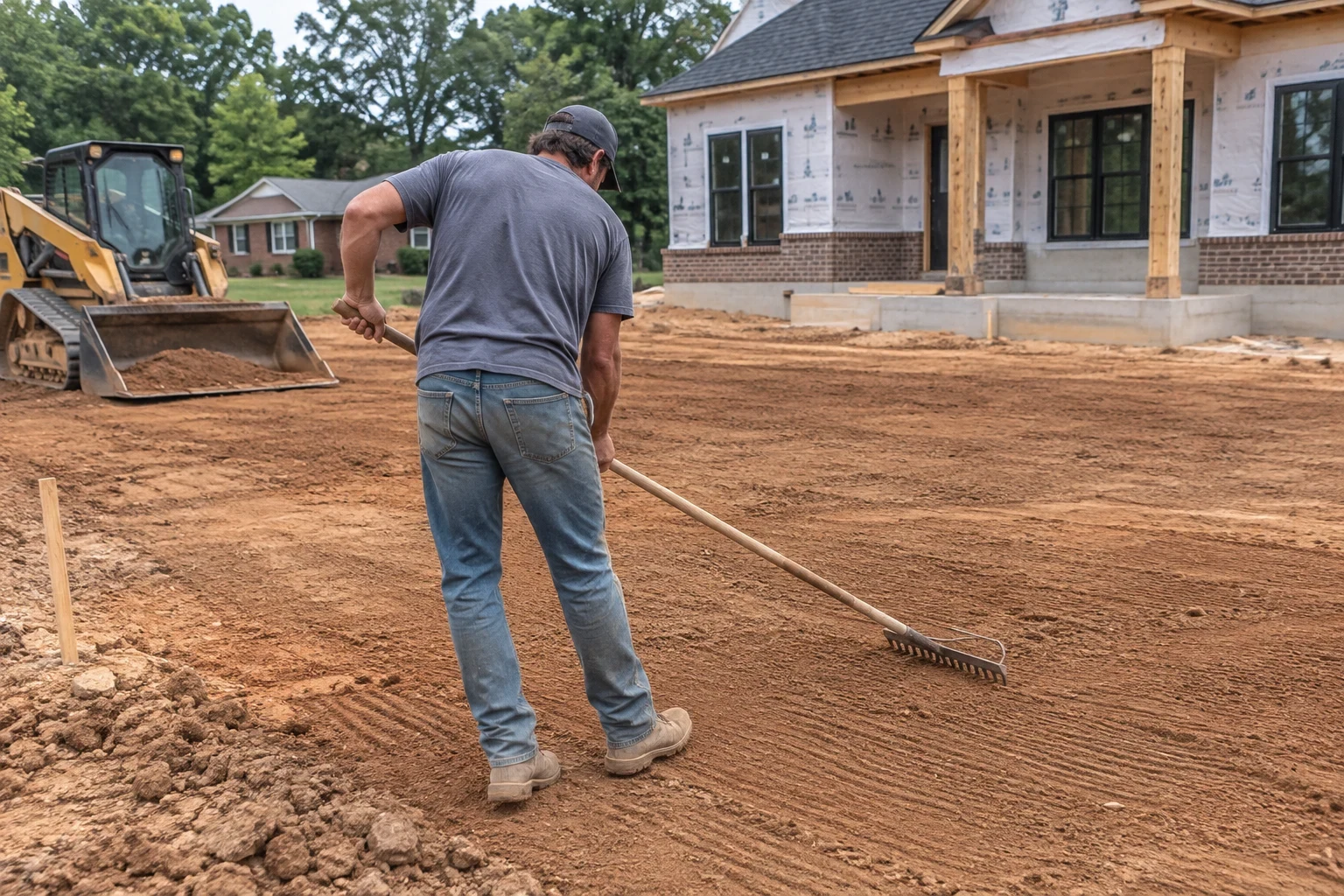
We shape your lot so the house sits right and water runs away from it. That means a solid, level pad for new construction, or regrading an existing yard that holds water. You get a realistic schedule up front and a heads-up when weather changes it.
What grading does for your lot
Grading is moving and shaping soil so the ground does what you need. On a new build, that means cutting and filling to a flat, compacted pad for the foundation. Around a finished house, it means setting the slope so rain heads away from the walls instead of toward them.
Most of what goes wrong with a yard starts with the grade. Water that sits against a foundation finds its way into crawlspaces and basements. Soft fill that was never compacted settles and cracks slabs. Getting the dirt right first saves money on everything built on top of it.
Dirt work is weather work. Red clay that is soaked can't be compacted properly, so we don't push it. We give you a schedule with room for rain built in and tell you as soon as a wet stretch moves the start date.
What our grading work covers
- 01
Building pad prep
We cut high spots, raise low ones and compact each layer of new soil as it goes down. The result is a firm, level pad ready for footings and the foundation crew.
- 02
Rough grading
This sets the overall shape of the lot after land clearing. We establish where water will flow and where the driveway and house will sit.
- 03
Finish grading
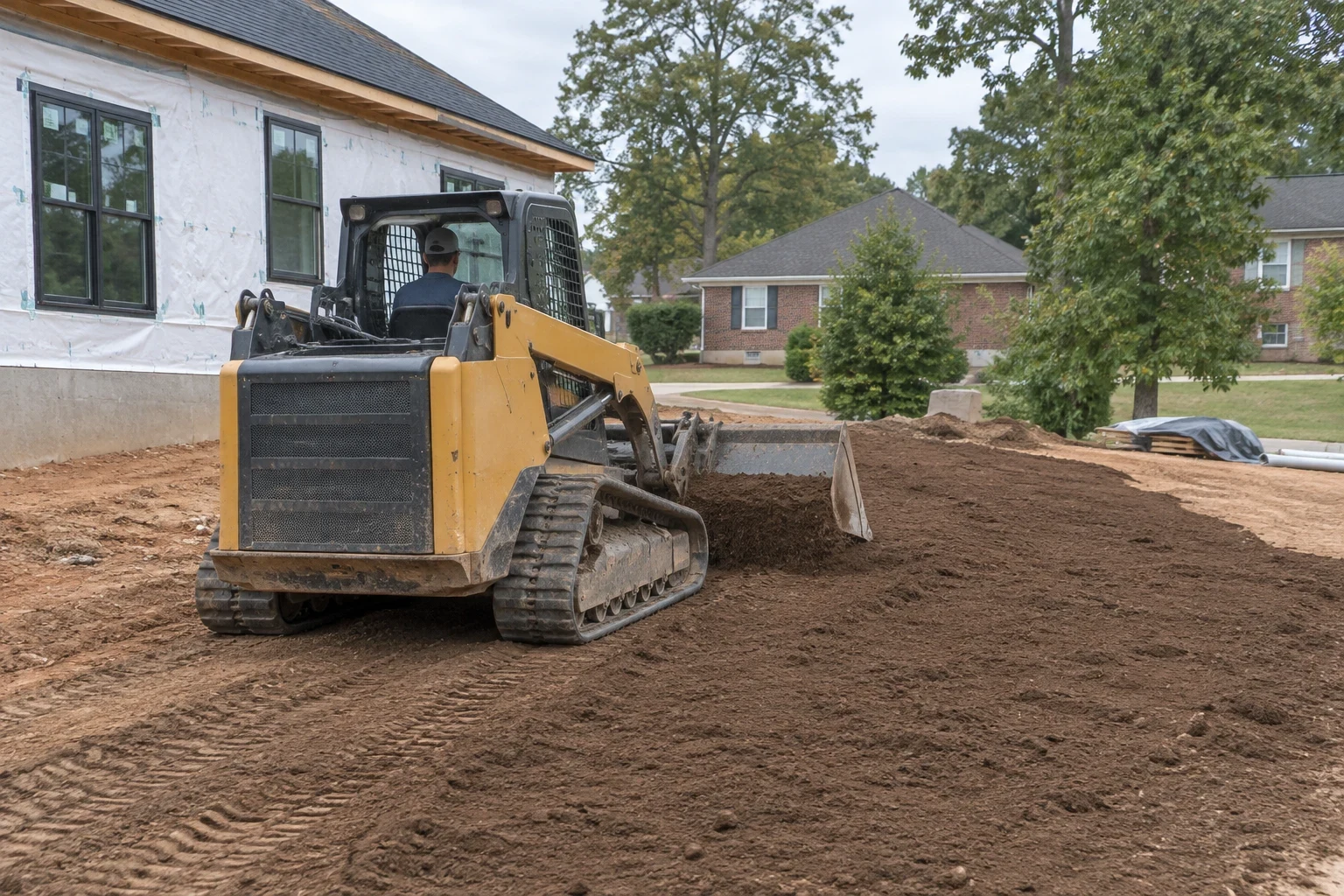
Once the house is up, we fine-tune the slope and spread topsoil. The ground falls away from the foundation so the yard is ready for seed or sod.
- 04
Drainage corrections
For existing homes, we regrade low spots and build shallow swales to carry water off. We look at where your downspouts dump before we move any soil.
- 05
Erosion control
Bare soil washes fast in a summer storm. We put up silt fence where needed and keep loose dirt from ending up in the street or a neighbor's yard.
Questions about Grading?
Call(864) 351-7045Signs your lot needs grading
Water pools near the house
Puddles that sit against the foundation after rain mean the ground slopes the wrong way. Over time that water gets underneath.
A damp crawlspace
Musty smells, standing water or wet insulation under the house often trace back to the grade outside, not a plumbing leak.
Soil washing out
Gullies in the yard, mulch carried onto the driveway or red mud on the sidewalk tell you water is moving too fast in the wrong place.
A sloped lot you want to build on
If your land rises or falls more than a few feet across the house site, it needs cut and fill before any foundation work can start.
Settling patios or walks
Concrete that sinks or tilts toward the house usually sits on fill that was never compacted. We can correct the base when the slab is replaced.
How a grading job runs
- 1
Walk the lot with you
We come out, look at slopes and drainage, and ask what you plan to build or fix. You hear what we think the ground needs in plain terms.
- 2
Written plan and schedule
You get the scope in writing and a start window that allows for weather. If a permit is needed for the amount of soil being disturbed, we tell you and handle the paperwork.
- 3
Equipment day
We let you know the day before when the crew and machines will arrive. We mark utilities first, set erosion control, then cut, fill and compact.
- 4
Check the slope
We shoot grades to confirm the fall away from the house is where it should be. Then we smooth the surface and clean up the street and drive.
- 5
Updates if plans change
Heavy rain can stop dirt work for a few days. When that happens, we call you with a new date instead of leaving you guessing.
What sets the price of grading
Every lot is different, so we price grading after we've walked it. The biggest swings come from how much soil has to move and whether you need to bring any in or haul any off. We spell it out line by line so you can see where the money goes.
- Amount of soil moved
- A gentle lot that needs a little shaping costs far less than a hillside that needs deep cuts and tall fill.
- Import or haul-off
- If the site can't balance its own cut and fill, we have to truck soil in or out. Trucking adds cost quickly.
- Soil and rock
- Clay compacts well when dry but takes longer to work. Buried rock or old debris slows the machines down.
- Access to the site
- Tight lots, steep driveways or trees that must stay limit what equipment fits and how fast we can work.
- Permits and erosion control
- Larger disturbed areas need stormwater measures and sometimes a permit. Both add time and materials.
Grading questions we hear often
How long does grading take?
A drainage fix around an existing house is often a short job. A full building pad on a sloped lot takes longer. Weather is the wild card, so we give you a realistic window and call you if rain moves it.
Can you grade right after it rains?
Usually not. Wet clay smears and won't compact, and fill placed wet can settle later. We wait until the ground dries enough to work it right, then pick back up.
How much slope should the ground have away from my house?
Building code calls for the ground to drop at least six inches within the first ten feet from the foundation where space allows. We set the grade to meet that and check it before we leave.
Do you need to clear the lot first?
Yes, trees, stumps and roots have to come out before grading. We handle land clearing too, so both can run back to back on one schedule.
Who takes care of permits and coverage on a grading job?
We do. Our company is licensed and insured in NC and SC, and we pull any permits the job requires before the machines show up.
Will my lawn be torn up?
The areas we regrade will be bare soil when we finish. We spread topsoil so it's ready for seed or sod, and we keep the machines off parts of the yard we don't need to touch.
Get your lot ready to build on
Tell us about your land or the water problem in your yard. We'll set up a project consultation, walk the site and give you a schedule you can plan around.